
It is common to hear that neurodivergent people “think differently” or that their brains are “wired differently”. Both phrases can be trying to name something real. Many autistic people, people with ADHD, dyslexia, dyspraxia or Tourette syndrome recognise enduring...
Neurodiversity

Do Neurodivergent Brains Function Differently?
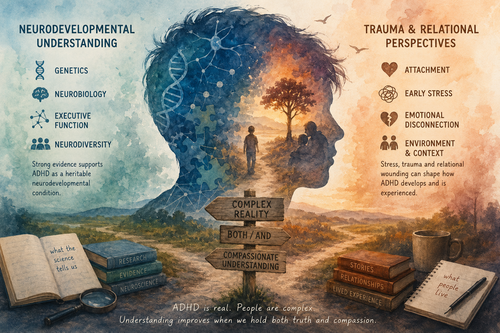
Concerns About Gabor Maté’s Teachings Among People with ADHD
Gabor Maté continues to have a strong influence on trauma-informed psychotherapy. His work on addiction, attachment, trauma, stress, and emotional development has resonated deeply with many people seeking alternatives to purely biomedical explanations of psychological...

A Neurodiversity-Affirming Reading List for Therapists and Clients
I was chatting with some other therapists about good books for neurodivergent folk. They came up with a list. This aims to be a curated, community-informed reading list for therapists and clients exploring neurodivergence. All books listed: support the neurodiversity...

Body Doubling for ADHD – Accountability and Focus Through Connection
For many people with ADHD, getting started can be the hardest part. Even when motivation is high, tasks can remain untouched, delayed by overwhelm, distraction, or inertia. One increasingly popular technique to break this cycle is body doubling: working alongside...
What Are the Advantages and Disadvantages of Self-Identifying as ADHD
Self-identifying as having Attention-Deficit/Hyperactivity Disorder (ADHD) means recognising in yourself a pattern of symptoms that seems to fit ADHD and using that label personally—often before (or instead of) a formal clinical diagnosis. In the UK, formal diagnosis...

Does Current Culture Around ADHD and ASD Encourage Unmasking or Exacerbate Features?
In recent years, there has been a growing awareness of neurodiversity, including conditions like Attention Deficit Hyperactivity Disorder (ADHD) and Autism Spectrum Disorder (ASD). Social media platforms, online communities, and popular media have brought these...

What Is Stimming and How Can It Help Neurodivergent People?
Often neurodivergent clients engage in behaviours known as “stimming.” Stimming, short for self-stimulatory behaviour, can include a wide range of actions like hand-flapping, rocking, spinning, or repeating words and sounds. While these behaviours are most commonly...

Empowering Autistic and ADHD Clients: The Transformative Role of Neurodiverse Counselling
Here Liz Pilley, an Autistic Counsellor and friend, talks about her experience of working with Neurodivergent clients. Working with Neurodivergent (ND) Clients One of my favourite things about being an autistic counsellor for clients who are autistic or have ADHD is...
To view the full article, just click on the article title (in dark blue.)