
A common worry about starting therapy is that you will be expected to sit down and say exactly what is wrong in articulate, emotional language. For some people, this is already manageable. They can describe feeling low, anxious, angry, or ashamed with reasonable...
Mental Health

What If I Cannot Explain What I Feel?

Is My Problem Serious Enough for Therapy?
A common barrier to starting therapy is the thought: “Other people have it worse.” You may look at your life and decide that your distress is not dramatic enough, not traumatic enough, or not unusual enough to justify seeking help. This thought can be surprisingly...
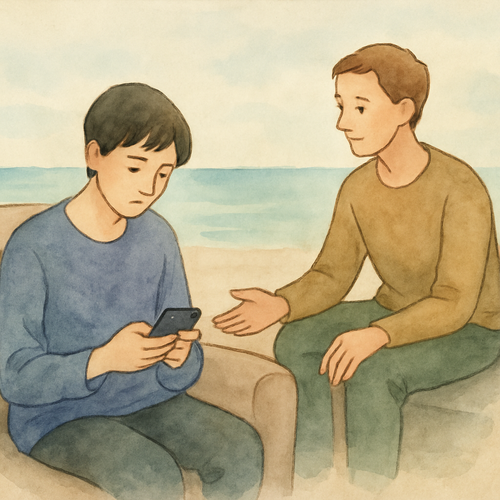
A Relational, Humanistic Critique of the “Dopamine Hole”
A Relational, Humanistic Critique of the “Dopamine Hole” SEO meta description A concise relational, humanistic critique of the popular “dopamine hole” self-help video from Newel of Knowledge, exploring what it gets right, what it oversimplifies, and how people in...

Therapy for the Overwhelmed – How to Begin When Everything Feels Too Much
When life feels unmanageable, even the thought of starting therapy can seem overwhelming. It can feel like justonemorething on top of a heap of things that are not getting done. So is not unusual for people to delay seeking help because they feel stuck in a cycle of...

Is the Flow State a Form of Dissociation?
The flow state, described by Mihaly Csikszentmihalyi as “being completely involved in an activity for its own sake,” is often hailed as the pinnacle of human productivity and creativity. But from a psychotherapeutic perspective, it prompts a deeper question: is flow a...

Addicted to Anxiety by Owen O’Kane – A Balanced Review
Owen O’Kane’s Addicted to Anxiety: How to Break the Habit (2025) proposes that anxiety functions like an addiction. Behaviours and thought patterns that initially feel protective become cyclical habits that reinforce fear and avoidance. His framework is structured...

Understanding the Window of Tolerance in Trauma Therapy
The concept of the Window of Tolerance, developed by Dr. Dan Siegel, has become an essential framework in trauma-informed psychotherapy. It describes the optimal zone of arousal in which a person can function effectively, think clearly, and engage socially. For those...

Book Review: Mindsight by Daniel J. Siegel
Daniel J. Siegel’s Mindsight: The New Science of Personal Transformation (2010) presents a compelling integration of neuroscience and psychotherapy, grounded in what he terms interpersonal neurobiology. Aimed at both clinicians and lay readers, the book combines...

The Pros and Cons of Using Touch in Psychotherapy
Touch is one of the most primal forms of communication, and its potential role in psychotherapy is both powerful and controversial. While some clinicians find therapeutic touch helpful for building rapport and promoting healing (e.g. Yalom), others warn against its...
To view the full article, just click on the article title (in dark blue.)