
Have you ever agreed to something you did not want to do, then found yourself angry, avoidant, or determined not to follow through? Or perhaps you have wanted closeness but become distant as soon as another person seems to expect something from you. These shifts can...
John Dray

When the Part That Pleases Meets the Part That Pushes Back

From Protecting Yourself to Feeling More Free
Some people move through relationships with an exhausting sense that they must either fit in or fight. They may please others until they feel invisible, then pull away or push back once the pressure becomes too much. There can be little room for a simpler experience:...
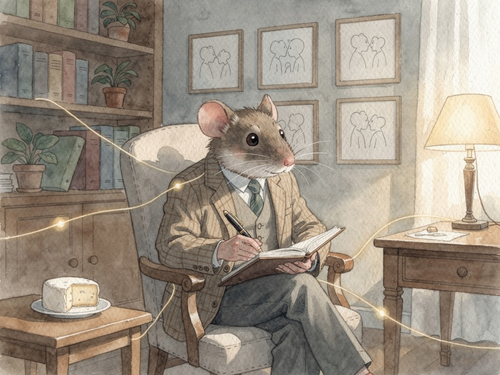
Petruska Clarkson was a Mouse!
Petruska Clarkson’s account of the therapeutic relationship is serious, useful and far more nuanced than this poem has any right to be. Her five relationship modalities offer a way of noticing the different kinds of connection that can arise in therapy: the shared...

Seemingly Insignificant Minor Interactions
Some of the most important moments in therapy do not look important at first. A slight pause before answering. A change of tone. A joke that arrives just as something painful is becoming visible. A glance away. A small apology. A moment of warmth that is quickly...

The Rebellious Adaptive Child: When Saying No Has Kept You Safe
Many people know the feeling of becoming suddenly resistant when someone tells them what to do. A request that seems ordinary can produce irritation, a wish to argue, an urge to leave, or a firm internal “no”. Afterwards, they may wonder why they reacted so strongly....

The Conforming Adaptive Child: Why We Learn to Please, Fit In, and Keep the Peace
Many people come to therapy with a painful question: “Why do I keep doing what other people want, even when it costs me?” It might show up as people-pleasing, avoiding disagreement, over-apologising, freezing in the face of authority, or feeling responsible for...

Why Am I So Hard on Myself?
There is a particular kind of pain in being criticised by your own mind before anyone else has spoken. You make a small mistake at work, and the thought arrives almost instantly: “Idiot. You keep getting it wrong.” You forget to reply to a message and think, “You’re...

Why Therapy Is More Than Finding the Right Label
Many people come to therapy with a question that looks something like this: “What is wrong with me?” Often underneath that question is a hope that there will be a name for what they are experiencing, and that the name will make everything make sense. Sometimes that...

Kurt Lewin, Group Dynamics and the Inner World of Trauma
Kurt Lewin and Donald Kalsched offer psychotherapists two very different ways of thinking about groups. Lewin helps us see the group as a dynamic field of forces, roles, norms, pressures and possibilities. Kalsched helps us see the inner world of trauma: the...
To view the full article, just click on the article title (in dark blue.)