
JD Psychotherapy
  • About Me
  • Anxiety
  • Depression
  • Sleep
  • LGBTQ+
  • Trauma
  • ADHD
  • The Archive
Select Page
Is the Flow State a Form of Dissociation?

Is the Flow State a Form of Dissociation?

by John Dray | 3rd Oct 2025 | Mental Health and Wellbeing Articles, Mental Health Tips

The flow state, described by Mihaly Csikszentmihalyi as “being completely involved in an activity for its own sake,” is often hailed as the pinnacle of human productivity and creativity. But from a psychotherapeutic perspective, it prompts a deeper question: is flow a...

Developments in Social GRRRAAACCEEESSS – Visible–Invisible and Voiced–Unvoiced A Balanced Review

Developments in Social GRRRAAACCEEESSS – Visible–Invisible and Voiced–Unvoiced A Balanced Review

by John Dray | 26th Sep 2025 | Mental Health and Wellbeing Articles, Mental Health Tips, Psychotherapist Resources

John Burnham’s chapter Developments in Social GRRRAAACCEEESSS: visible–invisible and voiced–unvoiced extends the familiar Social GRACES mnemonic (originally with Alison Roper-Hall) and explores how aspects of identity/difference can be visible or invisible and voiced...

Addicted to Anxiety by Owen O’Kane – A Balanced Review

Addicted to Anxiety by Owen O’Kane – A Balanced Review

by John Dray | 22nd Sep 2025 | Mental Health and Wellbeing Articles, Mental Health Tips, Psychotherapist Resources

Owen O’Kane’s Addicted to Anxiety: How to Break the Habit (2025) proposes that anxiety functions like an addiction. Behaviours and thought patterns that initially feel protective become cyclical habits that reinforce fear and avoidance. His framework is structured...

Is Computer Programming a Form of Dissociation or Avoidance?

Is Computer Programming a Form of Dissociation or Avoidance?

by John Dray | 21st Sep 2025 | Mental Health and Wellbeing Articles, Mental Health Tips

Computer programming is often celebrated for its creativity, logic, and problem-solving elegance. But what happens when our immersion in code becomes so complete that it detaches us from our emotional or relational lives? Could it be that programming is, at times,...

Choosing the Right Psychotherapy Modality

Choosing the Right Psychotherapy Modality

by John Dray | 21st Sep 2025 | Mental Health and Wellbeing Articles

Psychotherapy isn’t one-size-fits-all. With a range of modalities available—from Cognitive Behavioural Therapy (CBT) to psychodynamic, humanistic, integrative and relational approaches—selecting the right one can feel overwhelming. This guide will help you understand...

Understanding the Window of Tolerance in Trauma Therapy

Understanding the Window of Tolerance in Trauma Therapy

by John Dray | 3rd Aug 2025 | Mental Health and Wellbeing Articles, Mental Health Tips, Psychotherapist Resources

The concept of the Window of Tolerance, developed by Dr. Dan Siegel, has become an essential framework in trauma-informed psychotherapy. It describes the optimal zone of arousal in which a person can function effectively, think clearly, and engage socially. For those...
Questions to Ask a Firefighter Part in IFS Therapy

Questions to Ask a Firefighter Part in IFS Therapy

by John Dray | 31st Jul 2025 | Mental Health and Wellbeing Articles, Mental Health Tips, Psychotherapist Resources

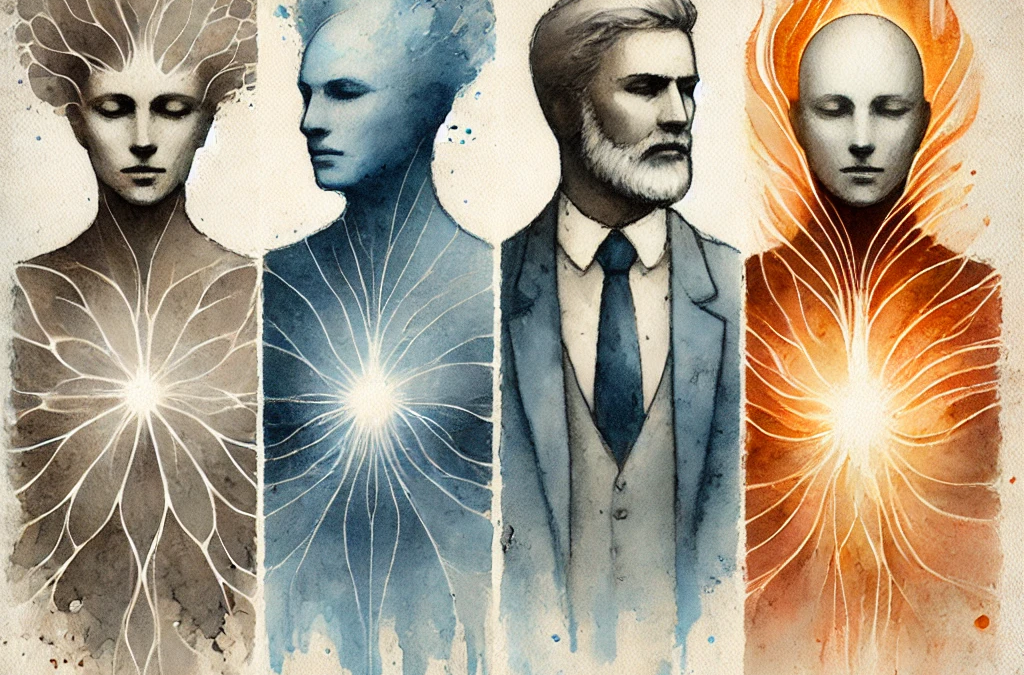
In Internal Family Systems (IFS) therapy, Firefighter parts are protective subpersonalities that react quickly and often dramatically when a person is overwhelmed by emotional pain. Their goal is not to cause harm, but to prevent further suffering—usually by...
Questions to Ask a Firefighter Part in IFS Therapy

Questions to Ask a Manager Part in IFS Therapy

by John Dray | 23rd Jul 2025 | Mental Health and Wellbeing Articles, Mental Health Tips, Psychotherapist Resources

In Internal Family Systems (IFS) therapy, Manager parts are proactive protectors that work to prevent emotional pain from surfacing. They strive to keep the system in control by managing behaviour, emotions, relationships, and external impressions. Unlike...
The Dangers of Using AI as a Therapist: When Speed Becomes a Threat

The Dangers of Using AI as a Therapist: When Speed Becomes a Threat

by John Dray | 18th Jul 2025 | Mental Health and Wellbeing Articles, Mental Health Tips, Psychotherapist Resources

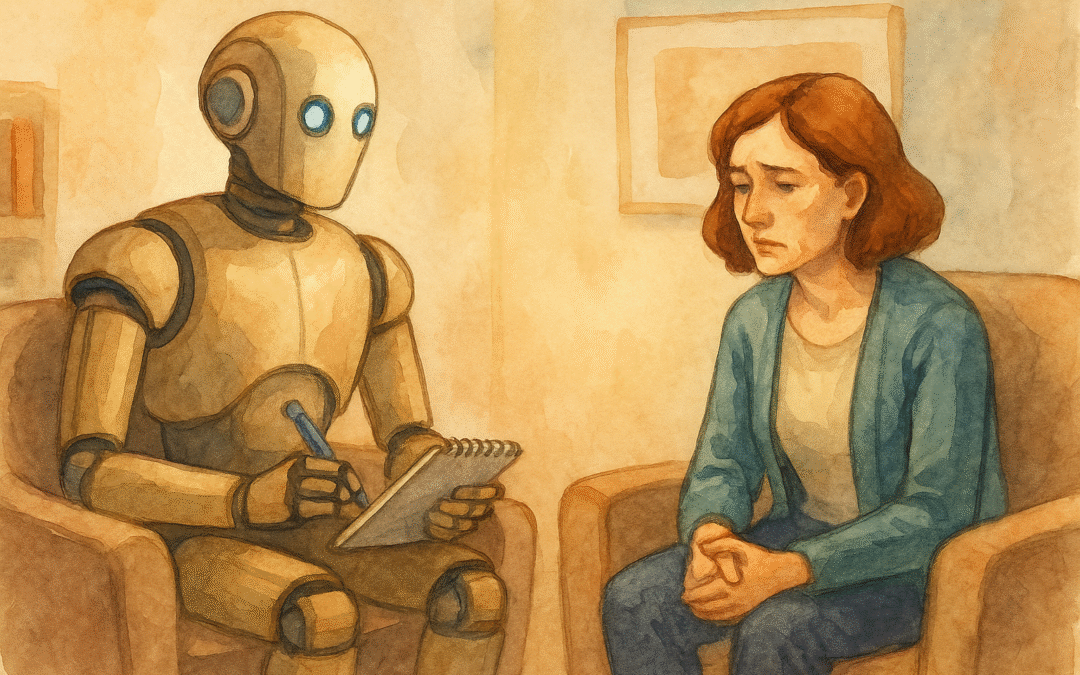
AI is being used in increasingly sophisticated ways to simulate human conversation and provide mental health support. While some apps and chatbots can offer valuable companionship or coping tools, using AI as a substitute for human psychotherapy carries significant...
Questions to Ask a Firefighter Part in IFS Therapy

Panic in the Therapy Room: Grounding vs. Internal Family Systems

by John Dray | 14th Jul 2025 | Psychotherapist Resources

When someone experiences a panic attack during therapy, the typical response is to help them “ground” — reconnecting with the present moment through the five senses, breathwork, or body awareness. This somatic approach often offers vital immediate relief. However, the...
« Older Entries
Next Entries »

Recent Posts

  • >
    Selfobjects and Developmental Trauma: A Self Psychological Perspective

    by John Dray
    March 8, 2026
  • Abstract watercolour-style image in shades of purple and blue suggesting relational diversity and fluid identity
    Reading on Bisexuality for Mental Health Professionals

    by John Dray
    February 25, 2026
  • A grounded square watercolour painting of a forest path dividing into clear routes, symbolising autonomous choice guided by conscience.
    How the Idea of Conscience in Human Beings is Reflected in the Structure of AI

    by John Dray
    February 17, 2026
  • >
    Kohut’s Self Psychology and the Role of Selfobjects in Psychological Wellbeing
    by John Dray
    February 8, 2026
  • Abstract representation of emotional responses to environmental change, showing fluid forms and shifting tones without text.
    Eco-Anxiety and Climate Grief – How Psychotherapy Can Help in a Changing World

    by John Dray
    January 31, 2026

You May Also Like...

Autonomy, Alignment, and the Psychotherapy of Systems

Autonomy, Alignment, and the Psychotherapy of Systems

Jan 17, 2026

The emergence of artificial intelligence that can update itself, modify internal models, and act with partial autonomy...

Reviewing Therapy for Perverts, Weirdos and Crazy Cat People

Reviewing Therapy for Perverts, Weirdos and Crazy Cat People

Jan 12, 2026

This article offers a reflective review of Therapy for Perverts, Weirdos and Crazy Cat People: A Lived Experience...

Understanding and Treating Chronic Shame – Reflections from a Relational Therapist

Understanding and Treating Chronic Shame – Reflections from a Relational Therapist

Jan 4, 2026

Introduction Working with clients who carry a persistent sense of shame often reveals how deeply these experiences are...

« Older Entries
Next Entries »
ADHD, ADHD Support, Adult ADHD, Affirmative Therapy, AI Alignment, Anger, Anxiety, Attachment Theory, Autism, Autonomy, Book Review, Boredom, Boundaries, Childhood Development, Christmas, Client Empowerment, Coercive Control, Cognitive-Behavioural Therapy, Communication, Coping Strategies, Counselling, Counsellor, Creativity, Defence Mechanisms, Depression, Dissociation, Domestic Abuse, Dream Completion, Dreams, Ego States, Emotional Healing, Emotional Maturity, Emotional Regulation, Emotional Well-Being, Ethical Practice, Executive Function, Family Dynamics, Flow State, Gestalt Therapy, GSRD, Holiday Stress, Humanistic Therapy, IFS Therapy, Inclusive Therapy, Insomnia, Internal Family Systems, Intersectionality, Intimate Partner Violence, IPV, LGBTQ History, LGBTQ+, LGBTQ+ Mental Health, LGBTQ+ support, Melanie Klein, Mental Health, Mental Health Support, Mental Well-being, Mindfulness, Neurodivergence, Neurodiversity, Neuroscience, Nightmares, Online Booking, Overwhelm, Parenting, Parts Work, Personal Growth, Pride Month, Psychoanalysis, Psychology, Psychotherapy, Psychotherapy Books, Psychotherapy Techniques, Psychotherapy Theory, PTSD, Relational Psychotherapy, Relational Therapy, Relationships, Self-Awareness, Self-care, Self-Compassion, Self-Discovery, Self-Reflection, Shame, Sleep, Sleep Hygiene, Somatic Therapy, Stress, Stress Management, Therapeutic Relationship, Therapy, Trans Rights, Transactional Analysis, Trauma, Trauma Healing, Trauma Therapy, Trauma-Informed Care, Trauma-Informed Practice, Wellbeing, Window of Tolerance

Any mental health tips on this site should not be construed as medical advice. 

  • Follow
  • Follow
  • Follow
  • Psychotherapy Agreement
  • GDPR Statement
  • Mental Health Tips
  • Psychotherapist Resources
  • Mental Health and Wellbeing Articles
  • Ethical Statement
  • Cookie Policy (UK)
Manage Consent
To provide the best experiences, we use technologies like cookies to store and/or access device information. Consenting to these technologies will allow us to process data such as browsing behaviour or unique IDs on this site. Not consenting or withdrawing consent, may adversely affect certain features and functions.
Functional Always active
The technical storage or access is strictly necessary for the legitimate purpose of enabling the use of a specific service explicitly requested by the subscriber or user, or for the sole purpose of carrying out the transmission of a communication over an electronic communications network.
Preferences
The technical storage or access is necessary for the legitimate purpose of storing preferences that are not requested by the subscriber or user.
Statistics
The technical storage or access that is used exclusively for statistical purposes. The technical storage or access that is used exclusively for anonymous statistical purposes. Without a subpoena, voluntary compliance on the part of your Internet Service Provider, or additional records from a third party, information stored or retrieved for this purpose alone cannot usually be used to identify you.
Marketing
The technical storage or access is required to create user profiles to send advertising, or to track the user on a website or across several websites for similar marketing purposes.
  • Manage options
  • Manage services
  • Manage {vendor_count} vendors
  • Read more about these purposes
View preferences
  • {title}
  • {title}
  • {title}