
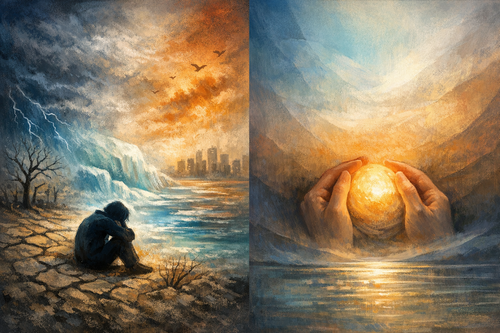

As the realities of climate change become increasingly difficult to ignore–increasing average global temperatures, increasing sea-level, more extreme weather–many people are experiencing profound emotional responses to environmental degradation, biodiversity loss, and an uncertain future. These responses are often described using terms such as eco-anxiety and climate grief. While not psychiatric diagnoses, they reflect understandable psychological reactions to chronic, global threats. Psychotherapy has a growing role in helping individuals make sense of these experiences, reduce distress, and develop sustainable ways of living with uncertainty.
What Is Eco-Anxiety?
Eco-anxiety refers to persistent worries, fears, and feelings of helplessness related to climate change and environmental collapse. It may include rumination about future catastrophe, guilt about one’s environmental impact, anger at institutions or older generations, and a sense of moral injury when personal values feel compromised. Importantly, eco-anxiety is not inherently pathological; it can be seen as a proportionate response to real and ongoing threats. Difficulties arise when anxiety becomes overwhelming, paralysing, or begins to interfere significantly with daily functioning.
Understanding Climate Grief
Climate grief encompasses feelings of loss associated with environmental destruction, whether that loss is personal, cultural, or anticipatory. Individuals may grieve the disappearance of familiar landscapes, species extinction, or the loss of imagined futures. This form of grief is often ambiguous and disenfranchised, meaning it lacks clear social recognition or rituals for mourning. As a result, people may struggle to articulate their grief or feel isolated in their emotional responses.
Psychological and Relational Dimensions
From a psychotherapeutic perspective, eco-anxiety and climate grief often intersect with earlier attachment experiences, trauma histories, and relational patterns. For some, environmental threat resonates with prior experiences of instability or neglect, intensifying feelings of powerlessness. Others may experience conflict between their values and their lived realities, particularly where economic or social constraints limit environmentally aligned choices. These experiences can activate shame, despair, or a collapse into disengagement.
Relational and trauma-informed approaches emphasise that emotional responses to climate change emerge within interpersonal, social, and cultural contexts. The distress is not solely located within the individual, but within a wider field that includes political inaction, social inequality, and collective denial.
How Psychotherapy Can Help
Psychotherapy does not aim to eliminate eco-anxiety or grief, but to support individuals in relating to these experiences differently. Key therapeutic contributions include:
- Providing a space where climate-related emotions are taken seriously and not minimised.
- Helping clients differentiate between what is within their control and what is not, reducing unhelpful self-blame.
- Supporting the integration of grief responses, allowing mourning without collapse into hopelessness.
- Developing emotional regulation skills to manage chronic uncertainty and threat.
- Exploring values-based living, enabling meaningful action without burnout.
Approaches that are relational, humanistic, and trauma-informed are particularly well suited to this work, as they validate emotional responses while fostering agency and connection.
From Individual Distress to Collective Meaning
A crucial therapeutic task involves moving from isolated distress towards shared meaning. Group work, community engagement, and collective action can mitigate the isolating effects of eco-anxiety. Psychotherapy can support individuals in finding ways to remain emotionally engaged while avoiding overwhelm, recognising that resilience is not solely an individual trait but a relational and social process.
Moving Forward
Eco-anxiety and climate grief reflect the psychological impact of living in a rapidly changing world. Psychotherapy offers a compassionate and grounded response, helping individuals process complex emotions, reconnect with values, and develop sustainable ways of living with uncertainty. Rather than viewing these experiences as symptoms to be eradicated, therapeutic work can honour them as meaningful responses that call for care, connection, and thoughtful engagement with the world as it is. The articles in the reference section give some more in-depth analysis of this deeply current phenomenon.
References
Clayton, S. (2020) ‘Climate anxiety: Psychological responses to climate change’, Journal of Anxiety Disorders, 74, 102263. https://doi.org/10.1016/j.janxdis.2020.102263
Cunsolo, A. and Ellis, N.R. (2018) ‘Ecological grief as a mental health response to climate change-related loss’, Nature Climate Change, 8(4), pp. 275–281. https://doi.org/10.1038/s41558-018-0092-2
Hickman, C. et al. (2021) ‘Climate anxiety in children and young people and their beliefs about government responses to climate change’, The Lancet Planetary Health, 5(12), pp. e863–e873. https://doi.org/10.1016/S2542-5196(21)00278-3
Pihkala, P. (2020) ‘Anxiety and the ecological crisis: An analysis of eco-anxiety and climate anxiety’, Sustainability, 12(19), 7836. https://doi.org/10.3390/su12197836